Greciangirl
Definitely if you’re on the old state pension, you qualify for PC.
It’s way below the newer SP. Which I think is unfair.
Not again.
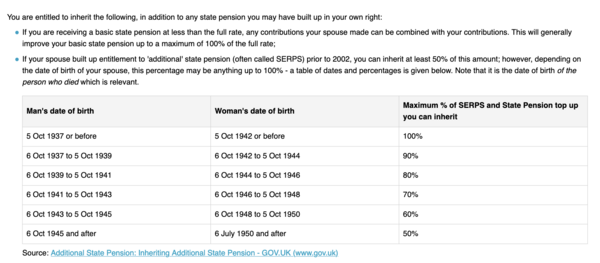
A lot of people on the OSP get far more than those on the NSP. The New one is fixed, and even those who have paid in enough for a full pension can't get enhancements for things like SERPS, spouse's contributions etc. I worked from the age of 16, including when I was a student, and paid NI every year until I retired. For most of that time I paid higher rate tax. My mother left work at the age of 21 when she was pregnant with me, and didn't work again until she was in her late 40s, when she worked for a few years until retiring at 55. She is on the OSP, but because she paid SERPS, had her pension contributions paid when she stayed at home for decades and inherited my father's SP (also enhanced by SERPS) she gets significantly more than I do, as well as the occupational pension my father left, and she has had those pensions for six more years than my generation. Most of her friends are in a similar position. If my husband goes before I do, I will get nothing of his SP, and the only reason I get a full NSP is because I have full contributions - many women of my generation do not.
It is simply not true to suggest that people on the OPS are necessarily worse off than those on the NSP. Some are, but others are significantly better off. I agree with Cossy that pension payouts should properly reflect contributions paid. If two people want to claim two pensions when only paying one lot of tax they should pay two NI contributions.
I don't want to see people like my mother penalised - she did nothing wrong - but I do think that that nobody should be worse off for working than they would be if they hadn't. I think that this sort of unfairness, which also extends to people on benefits being better off than if they worked*, and to young people being stuck with rents that pay others' mortgages is responsible for a lot of the resentment that is fragmenting our society.
The answer is not to cut benefits to those who have them, but to change the system so that the expectation is that everyone pays in and takes back in their own right, with exceptions only being made for those who are unable to do so. There should be subsidised childcare and free/very cheap retraining available to those who have been left behind when it comes to filling job vacancies, but nobody capable of work should be able to claim allowances that are paid for by others.
People who worked and paid full stamp but retired before 2016 on the OSP have been badly treated, IMO - the full SP should go to everyone who paid for it - but if they opted out of paying the full amount in, they must have realised that they wouldn't get the full amount out? I don't see any reason why married women should get a different deal from single ones, and pay less in to get the same amount back.
*I realise, of course, that many people on benefits also work - I am talking about people working short hours getting wages made up to full time, and people who don't work at all. I think that anyone working a full week should not need benefits to have a decent standard of living, and that the balance between NMW and the cost of housing and childcare should be such that no full-time workers should need benefits to survive.