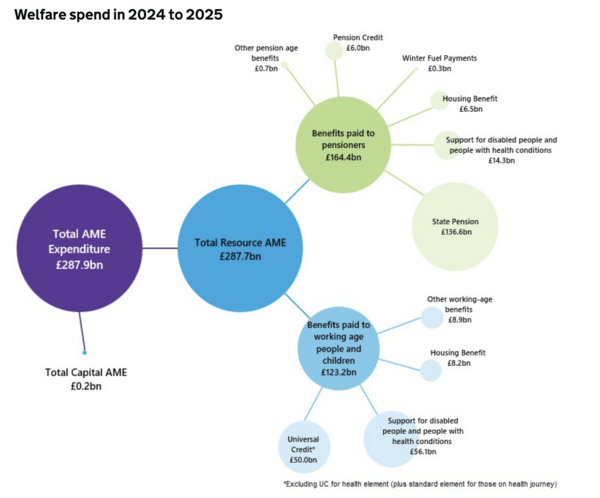
Sadly, we are living in an age where intergenerational warfare is being stoked by politicians and political commentators, again this notion of one person’s pocket being picked to pay for another’s free or easy ride without regard to the challenges and extra costs that older age brings.
Once upon a time, the only people of retirement age who could afford a comfortable lifestyle where those of private means, the upper class person with a private annuity or trust fund. Nowadays, many middle and working class pensioners are very comfortable. Around a million now pay higher rate tax so have an income of over £50,250. There will be many who have income in the middle range and may have valuable homes. But until such time as one can pay a council tax bill with a brick or a roof slate, or there is a way to release capital from a home without the loansharking of equity release companies, then it boils down to income. Many are asset rich but cash poor but many are simply poor even after a lifetime of work.
That there’s less than £200 between the tax threshold and the Pension Credit ceiling is ludicrous. That’s a cliff edge that the previous government should have seen coming and this current government should do something about.
On a recent thread I suggested a reintroduction of the tax age allowance. This had been in force for decades until George Osborne abolished it. It was means-tested on a tapering scale just as the tax personal allowance is now for those with higher incomes. I’d set it at £1,000 for those under 80 and £1,500 for those above. It would be a basic rate tax break equivalent to the Winter Fuel Payment. It would solve the problem of those with income equivalent only to the rate of the the full nSP (not aSP) being caught in the tax net next year.
I would get rid of Winter Fuel Payment and pass the responsibility for support to energy companies without loading the cost onto younger consumers. British Gas, Octopus, E.ON et all aren’t going to go broke for lopping £4 or £6 a week off the energy bill of pensioner households. The overall cost of WFP is around £2 billion. Spread around the sector is won’t make a huge dent in their profits. It would go some way to compensating for the social tariffs that haven’t been introduced or the “moral poll tax” of standing charges that militate against customers who are trying to economise on their bills and get to a point where their standing charges cost more than the energy they use.
£4 a week off my bill and I might blow it on a cafe coffee or the utter decadence of a sourdough loaf from the hardworking artisan baker in the market.
It's called putting money into the local economy, which supports local business, provides jobs and yields tax revenue for local and central government.


 .
.