GrannyGravy13, since the introduction of the Health & Safety at Work Act in 1974 workplace accidents have been reduced by 86% with that being on the back of an ever-growing workforce.
The foregoing means that each day many thousands return home from their workplaces in good health that would not have done so without the efforts of shop floor safety reps and professionals over those many years.
Of course, the main function of any business is to produce a profit for its investors, and in that anyone in the first stages of learning workplace safety will be instructed that safety in any business should be highly visual but unobtrusive to the everyday working of the business. The above successful figures have always been based on that perogative for there can be no other way if that success is to be maintained.
Sadly Britain and many other developed nations has entered the era of the "claims culture", and that has brought demands from employers for better protection from safety professionals against workplace safety claims.
The above has brought a huge increase in the last few years in regard to the efforts required to obtain the maximum safety in workplaces. By example, the average paperwork required for a risk assessment in the road haulage industry has increased from six to eight pages to ten or twelve pages, and there can be many hundreds of such assessments required in a large distribution centre. Insurance companies now often demand that safety audits are carried out where accidents have occurred involving a high cost to the employer and industry involved.
The above is in no way the fault of the shop floor safety reps or the professionals above them, as the basic legislation they work to has not changed since 1974. It is in fact solicitors who have built a whole new industry around the claims culture, and that multi-million pound industry is still growing.
Governments since 1998 have attempted to reduce health and safety obligations in all sectors with David Cameron advising that he wished to see the repeal of the HSAWA in favour of self assessment of safety by manufacturers of their products.
In the above, from what can be witnessed by way of the Grenfell enquiry, the initial changes that were carried out to the legislation clearly failed resulting in that terrible disaster.
So, to many Health and Safety can be rhetoric", but as Hillsborough and Grenfell amongst other incidents have demonstrated, when that rhetoric fails to take place, high claims or even worse high injury or loss of life takes place.


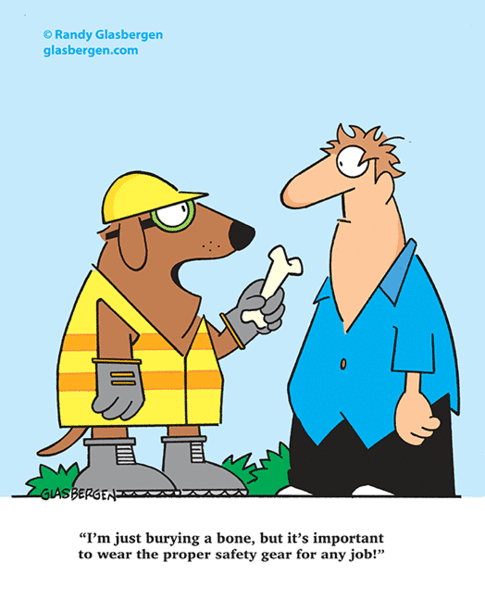
 Yawn
Yawn to you.
 when I referred to Elf n Safety. ???