butterandjam 13.05: "Apparently MP's private and personal life includes their views and opinions, including ones they express on social media".
I see where you're coming from butterandjam but even so all MPs actions even if deemed to take place in their personal life must not damage the reputation of Parliament. If so public duty takes precedence as the code clearly sets out. That is even if an MPs actions in his personal life have an adverse impact on public standing, if it violates standards or causes conflicts of interest the Parliamentary Code of behaviour comes into play.
We’ve seen this play out where MPs that have been suspended from the House and/or their party and in some cases even ejected from the House or their party for their behaviour in the private lives that falls below expected standards as public duty takes precedence.
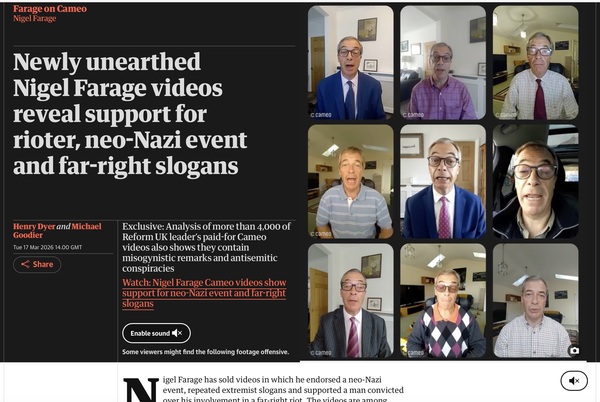
Also the code does not stand alone, it clearly sets out it is complementary to other rules of the House, e.g. Register of Members' Financial Interests and The parliamentary Behaviour Code Whether the racist and antisemitic content of Farage’s Cameo videos occurred in his private life or otherwise is also up a valid consideration where views may differ. The code helps us in that.
Further many of the Cameo videos were visibly made in Farage’s HoC parliamentary office which in itself breaches the code and makes it more difficult to argue his activity occurred in his “purely personal and private life as MPs are not allowed to use their parliamentary offices for personal use.
Also Farage openly has admitted that the making of the Cameo videos was for his ‘personal pecuniary benefit’ which according to the definitions below falls outside of personal private life and can not be deemed a personal hobby.
B – The scope of the Code
The Code applies to Members in all aspects of their public life. It does not seek to regulate what Members do in their “purely private and personal lives”. The obligations set out in this Code are complementary to the procedural and other rules of the House, the Oath or Affirmation of allegiance to the Crown, the rulings of the Chair and the Ministerial Code. In addition, no Member is above the law.
Definitions to help distinguish:
An MP’s public life involves all duties as a legislator and representative, governed by the Seven Principles of Public Life. In contrast, personal life covers private actions, family, and non-political activities. While private, personal life can impact public standing if it violates standards or causes conflicts of interest.
Definition of an MP's Public Life:
Public life is defined by activities directly related to their role as a Member of Parliament, subject to the Code of Conduct and the Seven Principles of Public Life (Nolan Principles).
Parliamentary Duties: Attending debates in the House of Commons, working in committee rooms, and voting on legislation.
Constituency Work: Holding advice surgeries, visiting schools, hospitals, and local businesses within their constituency.
Outside Interests & Meetings: Meeting with lobbyists, trade unions, or holding outside jobs, all of which must be disclosed in the Register of Members' Financial Interests.
Official Communication: Writing to ministers, issuing statements, and conducting media interviews on political issues.
Definition of an MP's Personal Life:
Personal life includes private time, family relationships, personal finances, and non-official, NON-PECUNIARY activities.
Private Time: Time spent away from the constituency or Westminster, including weekends.
Family & Relationships: Time with partners and children, often sacrificed due to long working hours.
Non-political Personal Activity: Personal hobbies, shopping, or personal travel.
The "Grey Area" and Accountability
The line between public and personal is often blurred, particularly regarding integrity.
Conduct: The parliamentary Behaviour Code requires respect and professionalism, even outside formal proceedings.
Conflicts of Interest: Private interests (financial or personal) must not conflict with public duties. If they do, public duty takes precedence.
Scrutiny: Media and public scrutiny often extend to an MP's personal life if it affects their ability to perform their duties or damages the reputation of Parliament.