Gransnet forums

Chat

Wales

(523 Posts)
Anniebach Wed 15-Mar-17 10:24:43

Just a little reminder such a country exists in the UK smile

Anniebach Sun 16-Apr-17 09:57:21

I was brought up and educated in the South Wales valleys, there was an obsession with education because it was the one way to get free from working in the pits, we even had extra lessons in Welsh history because it was not in the curriculum set by England

gettingonabit Sun 16-Apr-17 10:22:06

Me too, ab.

jessm I'm not sure of the actual figures but, yes, there was massive population growth in SE Wales between around 1850-early 20th century. Coal production in the Rhondda peaked in 1910. Population rose from around 5000 to 150000 in that time.

Chapels came and went too, no doubt, but there was a glut of Welsh Chapels being built to accommodate the growing fervour of the working classes towards Methodism. I can't find an English translation of Diwygiad, but I think "mass conversion" is probably close. All 3 Welsh chapels in my village were built in 1904, to accommodate these new devotees.

I remember my gran talking about it. Her parents were caretakers of such a chapel. She would have been part of that movement herself and remained very devout all her life. All the family attended chapel, including myself. All the Chapels are now closed, but still standing, reflecting the demise of Welsh in the Valleys.

I'm always struck by the size and relative grandeur of these buildings, given the meanness of the dwellings they serve.

SparklyGrandma Sun 16-Apr-17 15:18:25

Anniebach but boys in particular who went to the local secondary schools were not given attention to their literacy but to their manual skills. I have a near neighbour who is only about 74 and he can't read.

gettingonabit there are 2 of the old chapels near me which still have a congregation, they are not all closed.

Anniebach Sun 16-Apr-17 16:58:49

I hsve no idea which valley you live in Sparkly but I do know girls were more disadvantaged than boys come the 11+ , it was assumed girls would marry so not be bread winners, boys got into grammer schools with lower pass marks than girls, perhaps your neighbour had learning difficulties? My g grandfather was a Bsptist Minister and I inherited his journals, , his four children, one my grandmother, certaintly could write, I have poetry she wrote and her two brothers One was a solicitor , his son born just before the depression was head of the grammer school , and if you google Sir Horace Evans another family member who was born in Dowlais you will find he certaintly was well educated , he was a first cousin to my grandmother . Learning difficulties were not recognised in the forties, these children were just dismissed as not bright.

JessM Sun 16-Apr-17 17:03:11

Lots of people left secondary modern school with low levels of literacy back in the 40s and 50s. Levels of adult literacy were very high. And if you add into the mix that some may have been first language speakers of Cymraeg and they were schooled in English at the time...
I read something written by an English woman in her 80s only last week and it was only semi-literate. Her grandson said it was a typical example and not a one off.

JessM Sun 16-Apr-17 17:06:14

Data on Adult literacy - still not good. Would not surprise me if it was higher than average in parts of Wales.
www.literacytrust.org.uk/adult_literacy/illiterate_adults_in_england

Anniebach Sun 16-Apr-17 18:54:19

Yes Jess but the poor standards of secondary moderns was country wide, why do you say it would be higher in Wales

Welshwife Sun 16-Apr-17 19:17:31

After teaching for thirty years in England I moved to Wales. I was teaching primary ages but I was very surprised at how much lower the standard was in Wales to England - particularly with subjects such as IT.
Before I started teaching I was given a very thorough interview and it was obvious to me by the questions and the reaction to my responses that my experience in England was different. It did start to improve during tha time I was teaching there - only 5-6 years but had still not caught up. This standard of course had knock on effects to secondary schools.
Not so many Welsh children aspired to go onto further Education at that time but it has greatly improved and by the time my GC went through the system things had improved greatly. At the same time the Welsh Universities had a very good standard particularly for Engineering type degrees - which still holds true today.

Anniebach Sun 16-Apr-17 19:39:59

Wales was badly treated by Westminster so therefore suffered, we started this discussion on schooling in the forties and earlier, there is a thread on schools on this forum already.

Shall we not return to what is positive in Wales?

We have three Anglican churches, one Pentecostal, one R C Church, one Quakers Meeting House, one English Baptist Chapel, two Methodists Chapels

There have closure of many Anglican churches but they are not left empty, there is a service of deconsecration and the land sold

Jalima1108 Sun 16-Apr-17 20:04:36

I was under the impression that Wales had always produced a high number of teachers in comparison to the population, but that may not be correct; I was told this by a Welsh headmaster who I knew years ago. He said that families would do their utmost to stop a son going down the pit, all would club together to keep the brightest child in the family at school and then on to teacher training college, hence the high proportion of Welsh teachers.

He was, of course, referring to circumstances in years past as he would have been the same age as me and went to college in the 1960s.

daphnedill Sun 16-Apr-17 20:47:28

The adult illiteracy rate in Wales is much higher than the England/Wales average:

www.poverty.org.uk/w59/index.shtml

Sorry to be negative, but it's a fact.

Return to the positive...

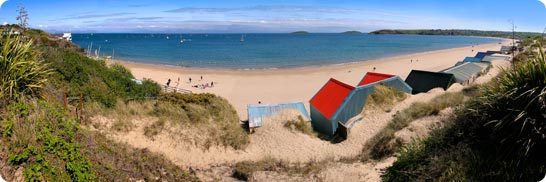
This is where I spent my summer holidays every year until I was 14. It was great (apart from the rain). You might know where it is JessM.

Anniebach Sun 16-Apr-17 21:07:42

Does anyone watch BBC Wales news 6.30pm, if so what is your opinion of Derek? smile

BBbevan Sun 16-Apr-17 21:10:00

Is Derek the weatherman Annii ?

Anniebach Sun 16-Apr-17 21:15:45

Yeeeees, and I am a big fan if Derek

BBbevan Sun 16-Apr-17 21:19:43

Excellent chap. I also liked the walks he did.

Anniebach Sun 16-Apr-17 22:40:13

He walks a lot on the Brecon Beacons for his own enjoyment He realy does love walking, locals who have net him up there say he is a realy friendly man and a good laugh, my sister in law has met him twice up there , she was charmed by him.

Jalima1108 Sun 16-Apr-17 22:48:50

I have seen Derek occasionally and he seems lovely. However, we have Ian who lives on a rooftop at the BBC in all winds and weathers and is never allowed down.

Anniebach Sun 16-Apr-17 23:13:39

We are far kinder, we allow Derek to stay in the studiosmile , I think everyone loves Derek

JessM Mon 17-Apr-17 07:19:50

That's interesting data daphnedill - and I am not surprised. There are greater levels of poverty in Wales than the English average and there is inevitably a high correlation.
Teaching as a career choice was very popular in the 20th century because there were relatively few professional career choices available. For boys from working class backgrounds it was teacher or preacher - or if they were very academically strong - academic or doctor. For girls it was teacher or nurse.
In my family background the first person to have a higher education was my grandmother's uncle who was a French teacher in Swansea Grammar School (boys only) back in last 19th C. His father worked in a copper smelting factory, his wife sold poultry in Swansea market and 2 of his sisters became primary teachers. At the same time my maternal grandfather had 2 teacher sisters in the Swansea valley. State education for all created a demand for teachers in industrial areas.

SparklyGrandma Mon 17-Apr-17 17:10:46

JessM daphnedill

Teaching on one side of my family almost seems to be an inherent skill. My grandmother was a pupil teacher in a Cardiff school at 16, saved enough to send herself to a local teacher training college for women at 19. At last count I am related to 9 teachers, all who taught in Wales and England. One teaches in Italy.

It's the loud voice that does it!

gettingonabit Mon 17-Apr-17 20:44:16

Funnily enough, of my two aunts, one became a nurse and the other a teacher. Both were born in the 1930s and were from a poor background.

Of the 10 Valleys friends I'm still in touch with, four became teachers and six became nurses (all female). I hadn't noticed until now! All of them work/live in the area. In fact, considering the lack of opportunities in the Valleys, very few people I was in school with moved very far away from their roots at all.

JessM Mon 17-Apr-17 20:49:09

Teach, become a nurse or get married and start a family before you're 20. That was about the sum of the choices for women.
We should remember that grammar schools were, originally, boys only.

JessM Mon 17-Apr-17 20:59:47

The 1944 Butler Act introduced free, universal, secondary education and the tripartite system with grammar, technical and sec modern.
There were some girls high schools before then, but they would not have been available to all.
My MIL who was born in the Midlands in 1930s passed the 11+ nut was not told, or sent to the grammar in the 1940s. Possibly because the uniform was judged too expensive. (or because she was a girl, and what was the point)
She eventually became a ward sister in a London teaching hospital, despite a very poor sec mod education staffed by teachers brought out of retirement, due to the shortage of younger ones who were doing war work.
My mother - just a few years older and born into a Welsh family where education was more highly valued - went to the girls High School in Swansea and on to Swansea Training College to become a primary teacher. Her exceptionally bright female cousin became a highly regarded professor in a London university.
I remember my mother saying that during the war she only had one thing to wear, which was her school gym slip, which was worn every day of the year.

Anniebach Mon 17-Apr-17 21:00:07

So teaching and nursing were menial occupations ? What did English girls do?

Welshwife Mon 17-Apr-17 21:49:59

My mother won a scholarship and went to a girls grammar school in London in 1918. She did a school leaving Cert. although she left before she was 15 - she was the eldest of 7 so needed to go to work rather than train as a couture dressmaker or train for the Post Office as the school suggested. She had a couple of jobs and always ended up in a supervisory role. She didn't get married till she was almost 30 so worked for about 15 years. She and my father knew each other all their lives and went to school with each other's siblings. They moved out of London to what was then the country before they had me! They were the first of either family to buy their own house during the war. My father was in a reserved occupation and worked at least twelve hours a day. They managed to save more than half the cost of a house in a couple of years and so bought one. Needless to say the younger siblings had a bit of an easier life when they were growing up.