
The word Nakba translates as - The Catastrophe. Every Arabic speaking people know what it refers to. It has left a wound that cannot heal because the Nakba continues right now.
When my DH had a heart procedure in Barts London recently one of the surgeons described himself as a Palestinian from Jordan. Even with his skills he and his family have no right to return to their homeland just as his parents and grandparents were refused this right.
Nobody can justify this.
Gransnet forums
News & politics
Palestine for the Palestinian peoples, Israel for the Israeli peoples
(245 Posts)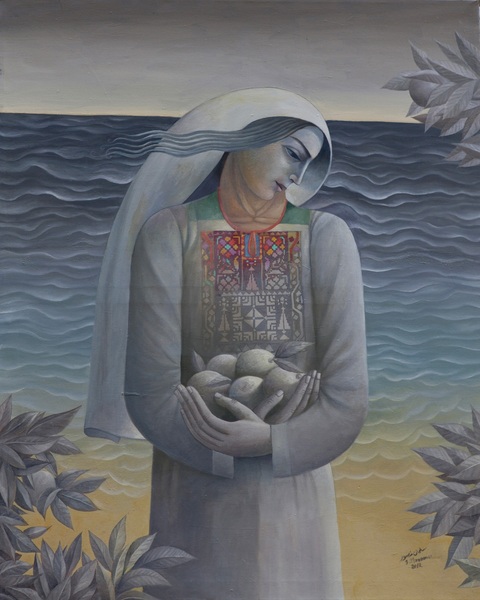
Palestine for the Palestinian peoples, Israel for the Israeli peoples
A lovely song of desire for peace
www.youtube.com/watch?v=25NNRnjHPfU&t=11s
I'd heard of it alright - back when my father told me he'd landed up witnessing it back in the 1940s in Palestine - and thoroughly disapproved of it.
So I knew the general gist - but it is only recently I've found out the name that it was given, when/why it all originated, what the eventual plan is (ie "Greater Israel"). The one thing I'm not clear on yet is why Netanyahu et al have such a hold on the American government and that hold obviously started before Trump came to power and so it's not just down to him.
A lot of Americans seem to go and live in Palestine - judging by how many American accents/American looks etc there are amongst them and it would be useful to see the back story as to why this is so and Americans have been emigrating there for some years now.
So - would be useful if anyone can provide any links as to just why the Americans are so involved in this (over and above the fact that other canal proposed for there is something that they seem to want as far as I can make out).
Somewhere or other will be a decent book or two on just why the Americans seem to get so involved in the Middle East as a whole - so it would be useful to have any links anyone has to these books.
I had never heard of Nabka until I joined the Gaza Threads.
Thanks for all of that information. So sad. Forced out. Still happening.
Babs03
CariadAgain
Did a quick flip to ChatGPT and asked re "the other side" and there are some authors who even go as far as denying the Nakba even happened and others who argue it was necessary or "the Arabs did it to themselves" type arguments. Might be useful to anyone wondering where on earth they get their "justifying" arguments from - the "Nowt bad happened" or "It wasnt us - it was them that were at fault" if anyone wants to prime themselves for the "other sides" self-justifying arguments.
Some people will attempt to square any circle, similar to Holocaust deniers.
Morally repugnant.
True dat!
To me - I wouldn't expect anyone to regard me as intelligent and aware about things if I'd just "taken on board" what some particular group I was in wanted me to think. I think "Nope I don't want people to spoonfeed me stuff and then just regurgitate it as 'my own' ". I'd like people to think me too intelligent to do that......it's about that and about pride and integrity to figure things out for oneself and not get spoonfed with one groups take on things only.
I guess it's proven useful "training in obedience" for some people leading the groups that spoonfeed these opinions to people to then see them regurgitated and know that these people havent bothered to investigate and think for themselves. They've just "swallowed the lot" of what they've been told by that group.
I've got a (good) friend that's in one of these groups (evangelical Christian in her case) and she's "swallowed the lot" of what she's been told on that subject - and I just have to keep off that particular subject in conversation. I don't understand it - as she's caring in other respects (or she wouldnt be a friend of mine in the first place) and we agree on a variety of other topics (trade unionism, general good manners, alternative healthcare as an option, anti-Lockdown and "that jab"). But on that topic - out comes all that stuff....
CariadAgain
Did a quick flip to ChatGPT and asked re "the other side" and there are some authors who even go as far as denying the Nakba even happened and others who argue it was necessary or "the Arabs did it to themselves" type arguments. Might be useful to anyone wondering where on earth they get their "justifying" arguments from - the "Nowt bad happened" or "It wasnt us - it was them that were at fault" if anyone wants to prime themselves for the "other sides" self-justifying arguments.
Some people will attempt to square any circle, similar to Holocaust deniers.
Morally repugnant.
Did a quick flip to ChatGPT and asked re "the other side" and there are some authors who even go as far as denying the Nakba even happened and others who argue it was necessary or "the Arabs did it to themselves" type arguments. Might be useful to anyone wondering where on earth they get their "justifying" arguments from - the "Nowt bad happened" or "It wasnt us - it was them that were at fault" if anyone wants to prime themselves for the "other sides" self-justifying arguments.
Maremia
Can't recall if I've mentioned it before - but I found that it was recommended one of the best books to read on what has happened in Palestine is "The Hundred Years' war on Palestine - a history of settler colonial conquest and resistance" by Rashid Khalidi.
I've got the latest edition - which has further stuff printed in 2024.
I've got so many books to read on so many topics that I've not got around to it yet - but looks a good one.
I can see he's written others on this topic too.
Many Palestinians were also displaced in 1967.
Hence the large figure of refugees in other countries.
5 million Palestinians live in exile with no right to return as a result of the Nakba. Many still in refugee camps.
“During the foundational events of the Nakba in 1948, about half of Palestine's predominantly Arab population – around 750,000 people[19] – were expelled from their homes or made to flee through various violent means, at first by Zionist paramilitaries, and after the establishment of the State of Israel, by its military. Dozens of massacres targeted Palestinian Arabs, and over 500 Arab-majority towns, villages, and urban neighborhoods were depopulated.[20] Many of the settlements were either completely destroyed or repopulated by Jews and given new Hebrew names.[20][21] Israel employed biological warfare against Palestinians by poisoning village wells. By the end of the war, Israel controlled 78% of the land area of the former Mandatory Palestine.
The Palestinian national narrative views the Nakba as a collective trauma that defines Palestinians' national identity and political aspirations. The Israeli national narrative views the Nakba as a component of the War of Independence that established Israel's statehood and sovereignty.[22] Israel negates or denies the atrocities it committed, claiming that many of the expelled Palestinians left willingly or that their expulsion was necessary and unavoidable. Nakba denial has been increasingly challenged since the 1970s in Israeli society, particularly by the New Historians, but the official narrative has not changed.[22][23][24]
Wiki
Maremia
Was the Nabka enforced by the same methods now being used by the Settler thugs in the West Bank?
I haven't yet studied that period.
The Nabka did enforce the removal of Palestinians from their homes. The Zionist military used force to evict people. Many fled to nearby countries.
Israel was allocated 55% of Palestine but by 1949 they controlled 78%.
They used a system of ethnic cleansing to rid Palestine of its people.
This is still being carried out now.
Was the Nabka enforced by the same methods now being used by the Settler thugs in the West Bank?
I haven't yet studied that period.
Oreo
Tell us more about the mysterious Welsh unofficial police force, what do they do, can anyone contact them or is it highly secret?Do you have to pay them?It all sounds very hush 🤫 hush.
Aka The Mafia?
Tell us more about the mysterious Welsh unofficial police force, what do they do, can anyone contact them or is it highly secret?Do you have to pay them?It all sounds very hush 🤫 hush.
With you on that one Maremia - and I suspect it was in the main very much on an illegal basis....eg I've seen enough tales of them being part-way through a meal and along came these thieving characters literally throwing them out of their own home.
A lot of what I saw in the past/see now sickens me. On another tack = I wouldnt know how to copy over a mini-video that's been doing the rounds in the last couple of days of those IDF soldiers that got caught out for raping Palestinians recently going into a gathering and getting treated as "heroes to be hailed" and people there singing and clapping etc in welcome of them. Some of them have got nothing remotely resembling a conscience - and I don't understand why....but that's how it clearly is.
Those characters clearly know they're (very much) in the wrong for what they did - but they are aware enough of what they deserve (and it ain't a rapturous reception/welcome home party they got!!!!!) that they were garbed up in masks and big sunglasses.
So I can easily see how their predecessors a few decades back went storming onto peoples land/into peoples homes and started grabbing, killing, etc.
They bring a whole new meaning to the word "entitled".
Sorry if I misled you there Cariad.
How those Palestinians were thrown off their land, makes me wonder if they were treated in the same way that the Palestinians are being hounded by the present day Settlers. In other words, how legal was their removal?
Maremia
Land registry. Rosie was concerned, or something, about that.
The Bible is not a land registry. Just because you owned a piece of land 2000 year ago, doesn't mean it still belongs to your tribe.
Just as the pieces of land belonging to the Palestinians much more recently is no longer their's after the Nakba, and even now, in the West Bank.
Though I do disagree re land that has recently been in official Palestinian ownership no longer being so. If it belonged to oneself, ones parents or ones grandparents and has not been officially transferred by the people themselves (ie by selling it on) then it still belongs to the people concerned or their descendants.
I'd certainly expect that anything that belonged to my family as far back as my grandparents was still ours - if they hadnt sold it.
Certainly there are a noticeable number of elderly Palestinians that still have the keys to their stolen houses - to make it very plain those houses are still theirs and they want them back.
I've often wondered what would happen if something similar to the Nakba or settlers throwing me off my land could happen to me here in Britain. I know I'd still retain ownership for sure and tell everyone it was still mine quite clearly - though if I'd proved unable to get my house itself back from the thieves there is an extremely high chance my house would have mysteriously had a fire that destroyed it completely (why bet on a certainty?). In the part of the country I'm in now = I know we have a second (unofficial) "police force" and know of several ways to contact them if needed. It's not exactly a fact that's hidden here....
Maremia
Are you serious Oreo, I'll be too busy catching up with old friends. Fraid you'll have to make that discovery for yourself.
You and me both Maremia - defo planning on catching up with old friends come the time.....exploring....you name it...
What we need now is a 'flood' of help, of all sorts for the people of Gaza, and relief from the Settlers, for the West Bank Palestinians.
And the indigenous Australian flood before that
Interesting about the Flood story, Allira,. The Gigamesh version written in Mesopotamia, predates the Biblical story of Noah, by maybe 1000 years.
Land registry. Rosie was concerned, or something, about that.
The Bible is not a land registry. Just because you owned a piece of land 2000 year ago, doesn't mean it still belongs to your tribe.
Just as the pieces of land belonging to the Palestinians much more recently is no longer their's after the Nakba, and even now, in the West Bank.
Allira
Rosie51
Maremia
Did I say there was?
Oh sorry, what are you telling me is in Croydon? I obviously misunderstood your answer. Many thanks have some
I'm confused.
Is Croydon Heaven on Earth?

I'm confused too, still waiting for Maremia to tell me what question Croydon is the answer to. I would doubt very much that anyone would think Croydon is Heaven on Earth 🤣🤣 No offence to anyone who lives in Croydon, my area wouldn't qualify either!
Maremia
Are you serious Oreo, I'll be too busy catching up with old friends. Fraid you'll have to make that discovery for yourself.
If I'm there first I'll try to send a sign. 🎆
Join the conversation
Registering is free, easy, and means you can join the discussion, watch threads and lots more.
Register now »Already registered? Log in with:
Gransnet »