TinSoldier
I’m not sure if this is correct but this is what makes sense to me.
If you reached state pension age before 6 April 2016, you come within the old rules - what's called the basic state pension.
If you paid into the Additional State Pension before 2016 and would have got more state pension under the old rules, you’ll get a ‘protected payment’. This is paid on top of the full rate of new state pension.
Currently, the basic state pension is £156.20 and the new state pension is £203.85.
If you are receiving an extra £12 taking you to £215.85 that’s £59.65 more than the basic pension.
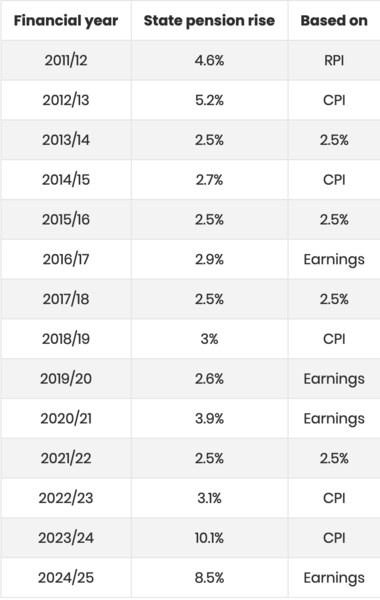
The triple lock rise in 2023 was 10.1%, 2022 it was 3.1%, 2021 2.5% and so on … see chart.
If you start with a base of £48 and add the percentage increases from whenever you started to receive your pension does that get you near to £59.65?
This is something I posted on another discussion about contracted out adjustments. Long but worth a read to try to understand the very complex adjustments that have to be made for people who contracted out:
www.lcp.com/media/1150050/why-is-money-being-deducted-from-my-state-pension.pdf
Hello Tin Soldier, thank you for your input, I actually come under the new State Pension rules (became entitled in 2021), so where the other thread is asking why they get less than the full SP, I am trying to work out why I get more than the full, well how the amount is worked out (I know when rules changed in 2016 there was a calculation done so that you wouldn't be worse off under the new rules). Clear as mud, sorry, but perhaps you know how its calculated now Ive given more info, thank you though.