
Whilst we shall hopefully be moving away from what has become too big a garden and a delightful courtyard to a mere Apartment, so reading through this thread so filled with sound advice makes me rethink.............are we really ready to say goodbye to all the work involved.... but also the delight and utter joy these places bring.
They are real sources of pleasure without a doubt.
Gransnet forums
Gardening
Tiny outdoor space ideas!
(33 Posts)My daughter's given me a spring/summer project (filling up my precious retirement time!) which is to revamp her small back garden. On a bit of a tight budget, but any innovative ideas will be greatly received!
Not violating protocol at all Jim. Always interesting to hear views from across the pond. ?
I’ve enjoyed this thread, as soon I’ll be moving into a house with a tiny garden. Lots of good ideas.
Thank youJim for your comprehensive and interesting post. 
I am new here on this site and live in the USA (zone 5 which means it gets a lot colder here that what England appears to get based on a simple internet search - zone 6 to 9. MUCH WARMER), so my info is not British and I am likely violating protocol. Sorry. But I have 40+ yrs of experience gardening where I live and thought I may have a tiny amount to add to this conversation.
First, the other posts are great and should be used as great input.
Your post does not indicate if you hope to create an awesome vegetable, herb, flower or mixed garden. IMO the more mixed the better. Not only does variety add interest to the garden along with getting fresh produce, but it also is more resistant to pests and disease. You should read about companion gardening to find which plants work best together and which should never be planted anywhere near each other.
Next, the use of perennials will keep costs low over the long run and provide stability to a garden. For example, I have not purchased beans, peas, potatoes, onions, pumpkins, squash, tomatoes and some other crops for a decades. Many gardeners are used to perennial shrubs and flowers will be there for a lifetime, but do not understand the same is/should be true for vegetables too. My situation is different from yours, but you get the idea.
Next if you drink coffee you need to save the coffee grounds. If you eat eggs save them too. Put this gold in the soil. They are like catnip for worms. Worms are your friends. Make them happy and you will be happy. The requirements for a plant to be great are 1) the right type and variety of plant for the area (trying to grow oranges in Canada will never be successful), 2) the right amount of sun (trying to grow apples in a cave will not produce fruit), 3) the right amount of water (habenaro peppers are not nearly as good when grown with too much water), 4) the right food (fertilizer - both macro and micro nutrients are essential), 5) the right PH (strawberries do not like soil that is too base), 6) timing/temperature (plant tomatoes in January in Alaska, and it doesn't matter how many of the other things you do perfect, they will not grow), and 7) the right soil (carrots grow poorly in a rocky clay mixed soil). Worms help with several of these. If you do them ALL right, you will have a great garden. To have a very good garden only means you (like the rest of gardeners) is still learning to get them all perfect, but we still produce ever better results.
Next save your non-meat table scraps and put them in your garden. If it is waste and not meat based it belongs in the garden - period. It is FREE fertilizer and helps in other ways.
I am better than most at math, have saved detailed records and have done the calculations. Generally speaking I generally get 4 to 40 times the value (based on market prices) compared to what I spend on my garden each year. But I have a lot of experience. I also intentionally produce a lot of produce beyond my wife and my needs that we intentionally grow to give to the food bank.
We all have our unique situations. It comes down to getting a broad spectrum of input and experimenting to find the right formula to make our garden successful.
God bless and I wish you success on your gardening journey.
Just this old guy's 2 cents.
Would dearly love a solar water feature..... Any recommendations?
We have got rid of all grass. Kept two Apple trees and a plum tree. These are regularly pruned to keep them in check.
The ground is grass free and low maintenance. Partly flagged and partly bark chippings. The chippings are topped up and refreshed each Spring with 2 bags of chippings £10.
We have a double wall that has various hostas.
Two tubs with quite mature evergreen bay shrubs, trimmed regularly to the size we want.
A tub with herbs, chives, rosemary, basil, thyme.
4 hanging baskets of glorious fushia. One basket of cherry tomatoes, Tom Thumb I think.
Two climbing roses in big containers on the side of the garage. A few troughs of nasturtiums (sp) on window sills and along the wall at ground level.
Summer wooden bench and oblong table of metal and toughened glass. The six chairs live in the garage until needed.
I hang trinkets of interest from the tree branches.... Glass pendants that catch the light, metal filigree butterflies, wooden hearts, a cow bell.
And a large bronze colour spinner attached to the 5' wall that reaches to to about 7'.. A few solar 'rock's that throw a light on the trees, the bird bath etc.
All joyful stuff and not much labour once I've potted up the troughs and baskets that usually go out the last week of May. They've probably been planted up for 3 weeks and just gone outside in the daytime, into the garage at night. End of May the night frosts are usually past.
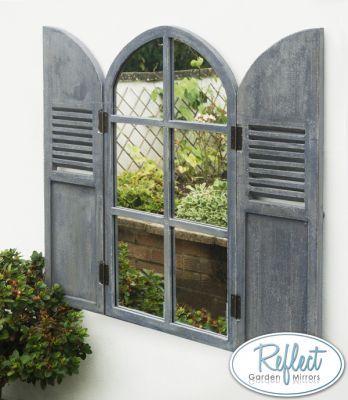
Last summer I went to the RHS garden show at Hatton and they had a show garden that were very similar dimensions to my own i.e very, very tiny. But it looked much larger and lighter and brighter and seemed to be packed to the gunnels with colour. That's when I noticed the garden mirror feature they'd hung on one of the walls. I bought this one for my own garden and it really does reflect not just the light, but also plants and colour and I'm really pleased with the effect in such a tiny space.
Nannylovesshopping...........indeed that chair has had me sat there supping many a fine cold drink believe me............and those days are surely -almost- here again!!!!!
Panache I love your garden, a large g&t and a sit in that chair, I would be a very happy girl 
Brick walls on three sides - about 5ft. Yes, the kids will definitely be outside. All of your answers have been really helpful! Thank you. And your gardens look gorgeous. I hope I can make a real success out of it and will keep checking back.
south facing - which is great!
Lovely garden pics from all and oodles of advice for small gardens.
Getting rid of lawn is key for a small space and creating height with verticals at the back, evergreen if possible, bamboos or a cheaper option the lemonygreen firs that sell for around £5 each and grow really quickly.
Apologies for making a bit of a mess with my posts earlier, but that came about with my trying to get those pictures posted.........I now have learnt the art and promise there will be no further mishaps (hopefully!)
Wanted to add that I have, in a cafe, seen a 'living wall' of salad, but that is quite beyond my rudimentary gardening skills!
I have a tiny deep bed that gives us salad & spinach all year round. At this time of year, I often buy a cheap 'living salad' from the supermarket and plant it out. In autumn I sow lambs' lettuce to make winter salads. I usually add some tumbling tomatoes and dwarf french beans during the summer.
I also have pots of herbs so I am not paying extortionate prices for a bit of thyme or sage.
I have found that mint in pots only lasts happily for a couple of years, so every year (just now) I take cuttings and plant up a new pot. I use the old pot for the first part of the summer whilst the new one is establishing itself, then chuck the old one and use the new one.
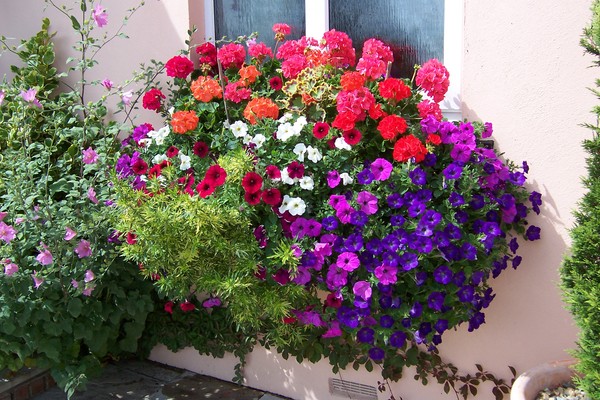
Try again!
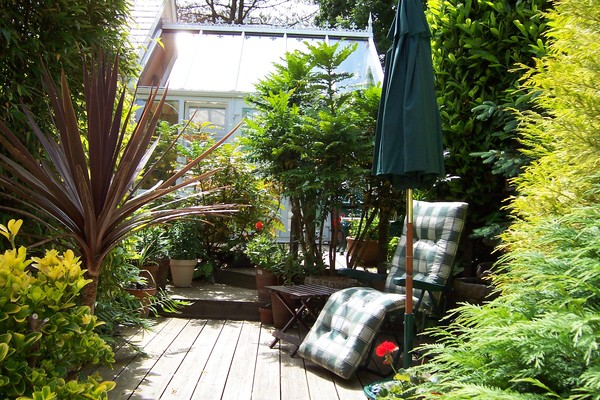
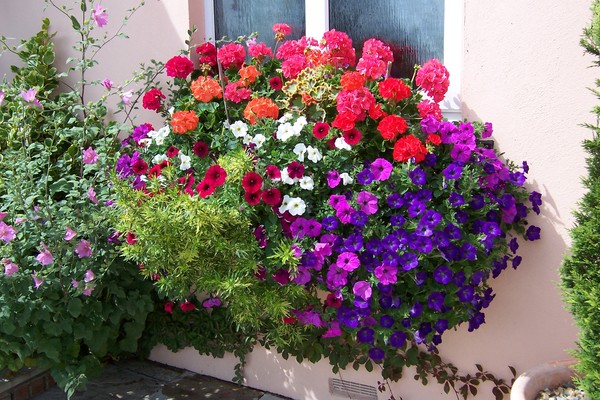
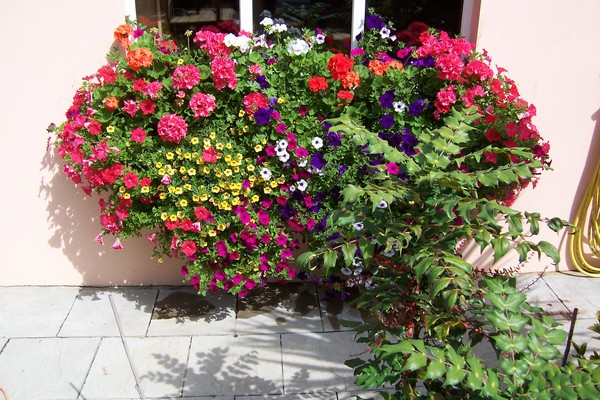
You are certainly a very knowledgeable and canny lot of gardeners.
Whilst talking of courtyards, you have touched upon my personal favourite kind of garden
So much one can do with that pocket sized piece of land, fully utilising the 4 walls/fences if possible, plus not forgetting those overlooking windows.
The walls are ideal for those climbers when the right aspect is chosen,plus one can add a few colourful hanging baskets and those half crescent kind to the walls,whilst those window cills make great places for a riot of colour in the form of window boxes.
With the base filled with all manner of greenery shapes together with all the colourful displays, you have a ready made sanctuary awaiting for the sun furniture of your choice.
A home from home which will give constant pleasure but much less work than say the mundane mowing of a lawn.............which seems to never cease!
I shall now try to post a few of our courtyard pictures but as a novice,please bear with me!!!
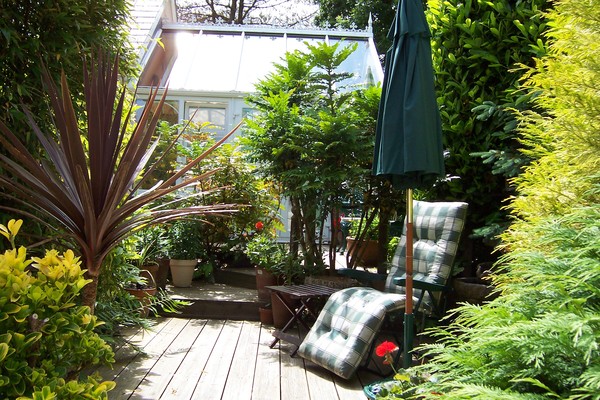
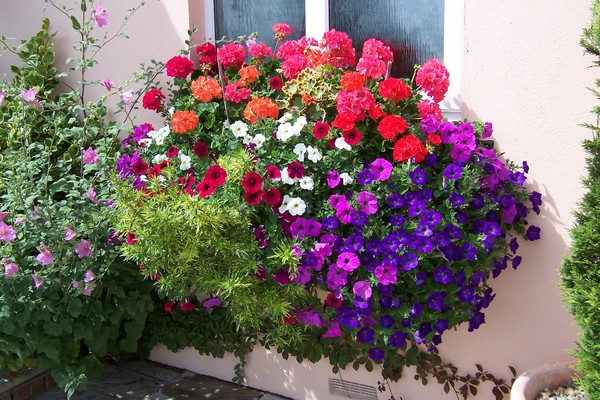
You have certainly covered so many of the needful aspects here, proving you are a keen and canny lot of gardeners!!!
Personally I love courtyards as they can be such a riot of greenery and colour, but not too much work as in mundane mowing for instance!!
But don`t forget any windows overlooking the area,it is your chance to add colourful window boxes, whilst any walls could hold Hanging baskets or/and these half crescent baskets brimming with seasonal colour.......... which when added to the main greenery will ensure you have a real sanctuary of pure pleasure.
(I am searching for examples and hope to be back later.
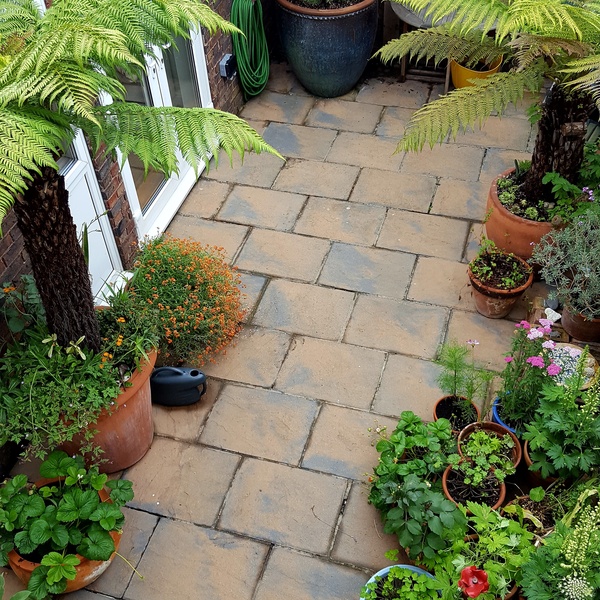
(Gr. Just typed a long post and lost it, here's the short version):
Our patio is small. We have 3 tree ferns that "make" our little garden for shade and show. Two came from the "sad plant shelf!" They survive London winters. The rest is in containers with plants that come back every year. (Not shown, cute bistro set table and 2 chairs!).
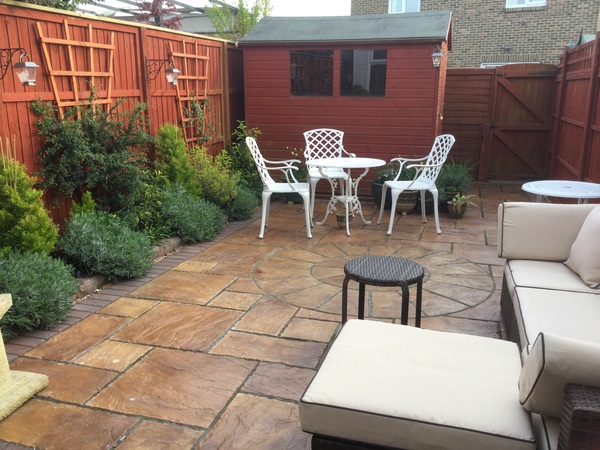
Mine is similar size and shape. I’ve paid to have it paved with a circle of paving in the centre, varnished so it stays shiny. I have a narrow border on the sunny side with lots of shrubs and I add bedding plants in the summer, lots of daffodils in the spring.
Can’t be bothered anymore with high maintenance hanging baskets so I have hung solar lamps on the brackets instead.
Climbing shrubs up the sunny fence.
A white cast iron table and chairs at the bottom in front of the shed and a rattan effect small corner sofa near the patio doors. I’m really pleased with it
Hi could do with bit more info re south north facing etc.
Also is it a court yard or open space?
I think structural works quite well.
Large ferns in shady corners (tiny ferns can often be found growing by drains).
Just because space is small it does not necessarily mean you have to go for small plants.
Dont forget to think upwards.
Hanging baskets are useful for growing Tom thumb tomatoes and strawberries.
Plant seeds now.
Herbs in window box in easy reach of the kitchen.
Do you have friends with gardens who you could beg politely for some cuttings?
Some garden nurseries or centres have hospital corner, I have often rescued an under watered shrub or plant that has gone on to thrive.
Hope you have an enjoyable and fun time
Laurelie?
I think the light is the most important thing too. Whenever we have bought a house, we have taken a compass when looking round. With a small garden, it is important to know where the light is; and whether parts are in shade (from fences and walls) at certain times of the day.
I also think that pots are the way to go - different sizes and levels to add interest.
Does she need to have a space for children to play? That needs to be taken into consideration too. You can have a lot of fun in a small space.
Forgot water! We have an electric water feature that tumbles - the sound is fabulous.
Yes you need to know which way your garden faces.
How much sunlight does it get?
Get a cheap garden soil test kit and test your garden soil to see if it is acidic or alkaline. It is very important to make sure the plants suit the soil and not all garden centres etc are very honest about the soil needs of particular plants.
Same with them not making it really clear that some plants cannot withstand low temperature. (As I see with many of these lovely Hebes.)
What is the soil like? Sandy, rocky or dreadful heavy clay.
Buy your plants to suit the soil.
My soil is on the acid side and I can grow rhododendrons etc.
I have though resorted to liming soil in some pots to grow Aubretia in pots and I have had sucess for the first time.
They always used to wither and disappear without trace.
I have more or less stopped buying plants that need an lime based soil. Enjoy.
Join the conversation
Registering is free, easy, and means you can join the discussion, watch threads and lots more.
Register now »Already registered? Log in with:
Gransnet »